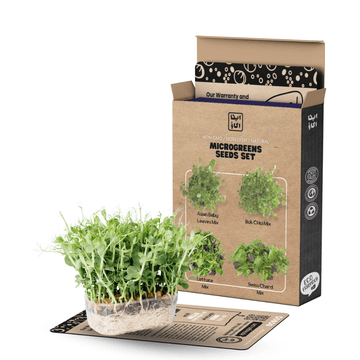
Microgreens
Sprouts, Microgreens & Baby Leaves: How to Eat and Use in Recipes

Sprouts, microgreens, and baby leaves represent different growth stages. Their flavour, texture, preparation, and food-safety requirements are not identical. Use untreated edible seed and correctly identify the crop before eating it.
Understanding the Three Stages
| Stage | How It Is Grown | How It Is Used |
|---|---|---|
| Sprouts | Germinated without soil; seed and root are often consumed | Salads, sandwiches, or cooked dishes according to food-safety guidance |
| Microgreens | Grown in a medium and cut above it | Garnishes, salads, wraps, and toppings |
| Baby leaves | Grown longer until several true leaves develop | Salads, sautéed dishes, soups, and cooked greens |
Food-Safety Basics
- Use seed sold for edible sprout or microgreen production.
- Never use treated garden seed for eating at the seedling stage.
- Wash hands, trays, knives, and work surfaces.
- Discard batches with mould, slime, decay, or unpleasant odour.
- Raw sprouts carry a higher microbial risk than mature vegetables; higher-risk individuals should seek professional guidance or use cooked sprouts.
Recipe Ideas by Crop
Alfalfa
- Sprouts: Sandwiches, wraps, and salads
- Microgreens: Raita, soup, or grilled-food garnish
- Baby leaves: Mixed salads
Beetroot
- Microgreens: Colourful topping for chaat, rice dishes, or feta salad
- Baby leaves: Sauté with garlic or add to mixed greens
Mustard
- Sprouts or microgreens: Add a peppery note to eggs, potato salad, sandwiches, and daal
- Baby leaves: Cook as a leafy green or add to warm salads
Swiss Chard
- Microgreens: Garnish wraps, soups, and rice bowls
- Baby leaves: Sauté with garlic, add to pasta, or cook like saag
Broccoli and Kale
- Microgreens: Add to chana salad, soups, wraps, and eggs
- Baby leaves: Use in stir-fries, soups, smoothies, or baked kale chips
Parsley
- Microgreens: Garnish kebabs, daal, pasta, and grilled food
- Baby leaves: Use in chutney, tabbouleh, sauces, and salads
Garden Cress
- Microgreens: Add to chaat, egg salad, soup, or sandwiches
- Baby leaves: Blend into pesto or use in a peppery salad
Lentil
- Sprouts: Use in chaat or cooked lentil dishes
- Microgreens: Add to rice bowls, wraps, or soups
Lettuce
- Microgreens: Use as a mild garnish
- Baby leaves: Add to sandwiches, burgers, kebab wraps, and salads
Pak Choi
- Microgreens: Garnish noodles, soups, and rice
- Baby leaves: Stir-fry briefly with garlic or add to broth
Radish and Turnip
- Microgreens: Add peppery flavour to chaat, tacos, sandwiches, and daal
- Baby leaves: Cook with other greens or sauté lightly
Sunflower
- Microgreens: Add to salads, wraps, sandwiches, and grain bowls
Serving Tips
- Add delicate greens after cooking so they retain texture.
- Pair peppery mustard or radish greens with creamy, sweet, or acidic ingredients.
- Use colourful beet and chard microgreens as a garnish rather than a large raw portion.
- Introduce unfamiliar crops in small amounts.
Final Thoughts
Grow and use each crop according to its correct edible stage. Clean handling, suitable seed, and appropriate storage are more important than decorative presentation.