Kitchen Gardening in Pakistan: Complete Beginner’s Guide

Kitchen gardening means growing vegetables, herbs, salad leaves and small fruits close to your home for regular household use. You do not need a large farm to begin. A sunny balcony, courtyard, terrace, rooftop, window ledge or small backyard can produce useful harvests when the crops, containers and season are chosen correctly.
Pakistan’s climate allows home gardeners to grow something during most of the year, but the same crop will not perform equally well in every month or city. Lahore’s summer heat, Karachi’s mild winter, Islamabad’s frost risk, Quetta’s cool season and monsoon humidity all require slightly different planning. This complete beginner’s guide explains how to start a manageable kitchen garden and gradually turn it into a productive routine.
Table of Contents
- Kitchen Gardening Quick Start
- What Kitchen Gardening Can Offer
- Step 1: Choose the Right Location
- Step 2: Select Pots and Grow Bags
- Step 3: Prepare a Good Potting Mix
- Step 4: Understand Pakistan’s Growing Seasons
- Best Crops for Beginners
- Step 5: Direct Sowing or Nursery Raising
- Step 6: Sow Seeds Correctly
- Step 7: Harden and Transplant Seedlings
- Step 8: Water and Mulch Correctly
- Step 9: Feed Container Plants
- Step 10: Provide Support and Use Vertical Space
- Step 11: Manage Pests with IPM
- Step 12: Protect the Garden from Extreme Weather
- Step 13: Plan Continuous Harvests
- Simple Eight-Container Starter Garden
- Seasonal Kitchen Garden Checklist
- Common Problems and Solutions
- Common Beginner Mistakes
- Frequently Asked Questions
Kitchen Gardening Quick Start
| Planning factor | Beginner recommendation |
|---|---|
| Starting size | Begin with 6–8 containers |
| Sunlight | 6–8 hours for fruiting vegetables; 4–6 hours for many leafy crops and herbs |
| Growing medium | Use a light, fertile and well-draining potting mix |
| Container rule | One mature fruiting plant per suitably sized pot |
| Watering rule | Check the soil first; water deeply when the upper layer begins to dry |
| Best first crops | Leaf lettuce, spinach, coriander, spring onion, basil, chilli, brinjal and radish |
| Fastest useful harvests | Baby leaves, radish, coriander, fenugreek and lettuce |
| Essential habit | Inspect plants twice a week for pests, disease and moisture problems |
What Kitchen Gardening Can Offer
A home garden can provide freshly harvested ingredients, seasonal variety and a practical way to learn how food crops grow. It can also make use of small spaces and create an enjoyable household activity.
- Harvest herbs and vegetables when they are needed.
- Choose varieties that may be difficult to find in local markets.
- Control the growing medium, fertiliser and pest-management products used in your garden.
- Use balconies, rooftops and courtyards more productively.
- Introduce children to sowing, plant care and seasonal food.
- Reuse suitable containers and composted garden material responsibly.
Kitchen gardening does not automatically make produce pesticide-free or completely organic. That depends on the seeds, soil amendments and treatments used. Follow food-crop labels carefully and wash harvested produce before use.
Step 1: Choose the Right Location
Before buying seeds, observe the available space for several days. Note where direct sunlight falls, how quickly containers dry and whether strong wind, reflected heat or standing rainwater may create problems.
| Available light | Suitable crops |
|---|---|
| 6–8 hours of direct sun | Tomato, chilli, capsicum, brinjal, okra, cucumber and gourds |
| 4–6 hours of sun | Lettuce, spinach, coriander, parsley, mint, spring onion and many baby leaves |
| Bright light with limited direct sun | Mint, selected leafy greens and nursery seedlings, although growth may be slower |
| Deep shade | Generally unsuitable for productive vegetable gardening |
Balcony and Courtyard Gardens
Use railings and walls for vertical support, but secure every pot and trellis against wind. Avoid allowing drainage water to fall onto neighbours or public walkways.
Rooftop Gardens
Check structural capacity, waterproofing, access and drainage before adding containers or stored water. Wet growing media is considerably heavier than dry media. Read the detailed rooftop edible garden guide before developing a large roof garden.
Backyards and Ground Beds
Select a position that does not remain waterlogged after rain. Keep vegetable beds away from wastewater, chemical storage, vehicle runoff and areas contaminated by unknown materials.
Step 2: Select Pots and Grow Bags
Containers must be food-safe, stable and fitted with open drainage holes. Fabric grow bags are useful because they are lightweight, movable and available in different sizes.
| Container size | Suitable crops |
|---|---|
| 5–10 litres | Coriander, parsley, mint, basil, spring onion and baby leaves |
| 10–15 litres | Leaf lettuce, spinach, radish, fenugreek and compact chilli |
| 15–25 litres | Chilli, capsicum, okra, compact tomato and smaller brinjal varieties |
| 25–35 litres | Large tomato, brinjal, cucumber and broccoli |
| 40–60 litres or larger | One vigorous gourd, pumpkin or large climbing vine |
| Deep pot, 25–35 cm or more | Carrot, beetroot, turnip and other root crops, depending on variety |
A 26-litre fabric grow bag is suitable for many fruiting vegetables. Smaller 5-litre grow bags work for herbs and nursery plants, while a 52-litre grow bag provides more space for large vines and deep-rooted plants.
Container Checklist
- Use one mature tomato, capsicum or brinjal plant per large container.
- Raise pots slightly so drainage holes remain clear.
- Leave a small gap below the rim for watering.
- Do not use containers that previously held fuel, paint, pesticides or unknown chemicals.
- Protect small black pots from extreme summer heat.
- Secure rooftop and balcony containers against wind.
Browse the complete ApnaUgao grow bag collection for additional sizes.
Step 3: Prepare a Good Potting Mix
Ordinary field soil alone is usually too dense and heavy for containers. It can compact around roots, drain slowly and become difficult to re-wet after drying. A useful kitchen-garden mix should retain moisture while allowing excess water and air to move freely.
Practical Container Mix
- 40% coco peat for moisture retention
- 30% quality potting mix or screened fertile loam
- 20% mature compost or vermicompost
- 10% perlite for aeration and drainage
This is a flexible starting formula. During very dry weather, slightly more moisture-retaining material may help. In monsoon conditions or heavy soil, drainage and aeration become more important.
Useful growing-media options include:
- BIOGRO Premium Organic Potting Mix
- BIOGRO Premium Planting Coco Peat
- BIOGRO Premium Organic Perlite
- BIOGRO Organic Vermicompost
- BIOGRO Premium Peat Moss
Mix all components evenly before filling pots. Do not use fresh animal manure around vegetables. It can damage roots, introduce weeds and create food-safety concerns. For a deeper explanation of soil components, read how to use potting and soil media.
Step 4: Understand Pakistan’s Growing Seasons
Pakistan has broad cool, warm and monsoon growing periods, but actual sowing dates vary with city, altitude and yearly weather. Use temperature and local conditions as the final guide.
| Region | Cool-season focus | Warm-season focus |
|---|---|---|
| Lahore and Punjab plains | September or October to February for leafy greens, roots, peas and brassicas | February to April and suitable late-monsoon planting for tomato, chilli, brinjal, okra, cucumber and gourds |
| Multan and southern Punjab | October to February | Plant early enough to avoid flowering during peak heat; late-summer nurseries need protection |
| Karachi and coastal Sindh | October to March is productive for many vegetables | Warm-season crops can grow for longer, but humidity, heat and drainage require attention |
| Islamabad, Rawalpindi and Peshawar | Autumn through early spring, with protection during frost | Spring and late summer after severe conditions ease |
| Quetta and cooler uplands | Protected winter gardening where suitable | Spring planting after damaging frost has passed |
| Northern hill regions | Short cool-season windows depend on elevation | Spring to early autumn after frost risk |
Cool-Season Crops
Lettuce, spinach, coriander, fenugreek, parsley, peas, radish, carrot, beetroot, turnip, broccoli, cabbage, cauliflower and kale.
Warm-Season Crops
Tomato, chilli, capsicum, brinjal, okra, cucumber, basil and gourds.
Monsoon Crops
Okra, brinjal, chilli, cucumber and selected gourds can grow during suitable rainy-season windows when drainage and disease management are strong. Browse the rainy-season seed collection for suitable options.
Best Crops for Beginners
| Crop | Why it suits beginners | Suggested product |
|---|---|---|
| Leaf lettuce | Fast cool-season leaves and repeated light harvesting | Leaf Lettuce Seeds |
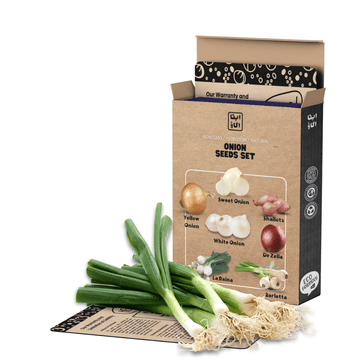
| Spring onion | Compact growth and useful in shallow containers | Spring Onion Seeds |
| Fenugreek | Quick leafy harvest and simple direct sowing | Qasuri Methi Seeds |
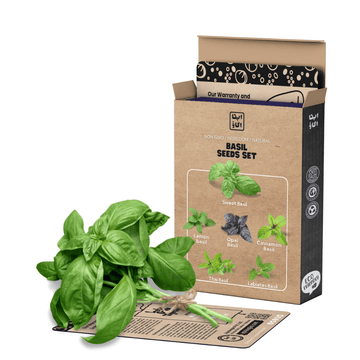
| Sweet basil | Productive warm-season herb that responds well to regular cutting | Sweet Basil Seeds |
| Radish | Fast root crop for cool weather | Browse root vegetable seeds |
| Beetroot | Edible roots and leaves in a deep container | Desi Beetroot Seeds |
| Chilli | Long harvest from one warm-season plant | Browse hot chilli seeds |
| Round brinjal | Reliable warm-season container crop | Round Brinjal Seeds |
| Cherry tomato | Frequent harvest when given a large pot and trellis | Black Cherry Tomato Seeds |
| Cucumber | Fast climbing vine when supported | Alficoz Cucumber Seeds |
Seed Sets for a Simple Start
- Container Garden Vegetable Seed Set for limited spaces
- Winter Vegetable Seeds Set for cool-season planting
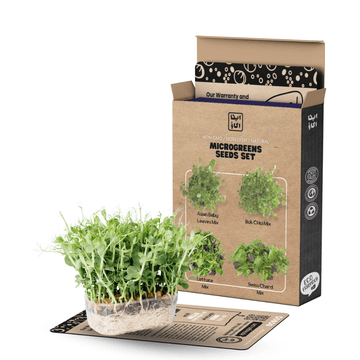
- Leafy Greens Seeds Set for repeated leaf harvests
- Salad Seeds Set for mixed salad ingredients
- Summer Vegetable Home Gardening Kit – GREEN BOX for warm-season planting
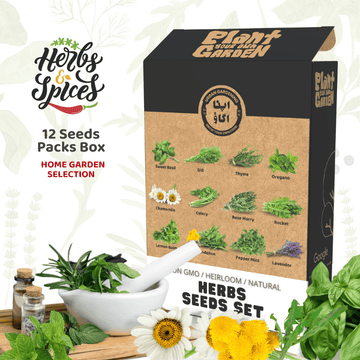
- Superfood Vegetable Seeds Set for a varied kitchen garden
Step 5: Direct Sowing or Nursery Raising
Some vegetables dislike root disturbance and should be sown where they will grow. Others benefit from nursery protection while seedlings are small.
| Direct sow in the final container | Start in trays or small pots |
|---|---|
| Carrot, radish, turnip and beetroot | Tomato, chilli, capsicum and brinjal |
| Okra, cucumber and gourds | Broccoli, cabbage and cauliflower |
| Peas and beans | Delicate herbs during harsh weather |
| Coriander and fenugreek | Lettuce when transplanting gives better spacing |
Large seeds such as okra, cucumber and gourds can be direct-sown into a warm final container. Root vegetables should not be transplanted because disturbed roots may become forked or misshapen.
For detailed nursery guidance, read how to start seeds indoors in Pakistan.
Step 6: Sow Seeds Correctly
- Fill clean trays or pots with a fine, moist seed-starting mix.
- Read the seed packet and sow at the recommended depth.
- As a general rule, cover small seeds lightly and larger seeds more deeply.
- Label the crop, variety and sowing date.
- Water gently so seeds are not displaced.
- Keep the mix moist but not waterlogged.
- Move seedlings into bright light immediately after germination.
- Thin overcrowded seedlings while they are small.
Why Seeds Fail to Germinate
- Old or poorly stored seed
- Soil that is too cold or excessively hot
- Sowing too deeply
- Allowing the mix to dry during germination
- Keeping the seed continuously waterlogged
- Discarding slow-germinating varieties too soon
Do not soak every seed automatically. Some larger or hard-coated seeds may benefit from limited soaking, but many small vegetable seeds perform better when sown directly into a consistently moist medium.
Step 7: Harden and Transplant Seedlings
Seedlings raised indoors, in shade or under protection must adjust gradually to outdoor sun and wind. Sudden exposure can scorch leaves and stop growth.
Seven-Day Hardening Method
- Begin with one or two hours of gentle morning sun.
- Increase outdoor exposure each day.
- Protect seedlings from harsh afternoon heat, strong wind and heavy rain.
- Reduce watering slightly without allowing severe wilting.
- Transplant in late afternoon or during cloudy weather.
Water the tray before transplanting. Hold seedlings by their leaves rather than crushing the stem, keep the root ball intact and water the final container after planting.
Tomato seedlings can be planted slightly deeper because buried stems form additional roots. Most chilli, capsicum and brinjal seedlings should remain close to their original depth.
Step 8: Water and Mulch Correctly
Watering is the most common source of beginner problems. Do not water every pot on the same fixed schedule. A small fabric bag in summer dries much faster than a large plastic pot in winter.
- Check the upper 2–3 cm of growing mix.
- Water slowly and deeply when it begins to dry.
- Water in the morning whenever possible.
- Direct water toward the soil rather than splashing leaves.
- Allow excess water to drain fully.
- Reduce watering during cool, cloudy or rainy weather.
- Never leave pots standing in stagnant water.
Signs of Underwatering
Dry, lightweight soil; drooping leaves that recover after watering; flower drop; small fruit and leaf-edge scorch.
Signs of Overwatering
Constantly wet media; yellowing; fungus gnats; weak growth; root smell; and wilting even though the soil is wet.
Mulching
Apply a 3–5 cm layer of clean straw, dry leaves or another suitable organic mulch after plants establish. Keep it slightly away from stems. Mulch reduces evaporation, soil splash and rapid root-temperature changes.
Step 9: Feed Container Plants
Container nutrients are gradually used by plants or washed out through drainage. Begin with mature compost or vermicompost, then feed according to the crop and product label.
Leafy Crops
Leaf lettuce, spinach and herbs need steady but moderate nutrition. Excess fertiliser can create soft growth and salt stress.
Fruiting Crops
Tomato, chilli, capsicum, brinjal and cucumber need balanced nutrition during early growth and reliable support during flowering and fruiting. Too much nitrogen can produce large leaves with few flowers.
Safe Feeding Rules
- Apply fertiliser only at the labelled rate.
- Do not place concentrated fertiliser directly against roots or stems.
- Water dry, stressed plants before feeding.
- Reduce feeding when growth slows during severe heat or cold.
- Flush containers with plain water if salt buildup is suspected and drainage is adequate.
Browse the ApnaUgao fertilisers and nutrients collection for available options.
Step 10: Provide Support and Use Vertical Space
Vertical gardening allows a small area to support more crops, but trellises must be strong enough for wind and mature fruit.
- Stake tomato, chilli, capsicum and brinjal before branches become heavy.
- Use a trellis for cucumber, peas, beans and gourds.
- Tie stems loosely with soft material.
- Support large gourds and melons with individual slings.
- Keep vines away from drains, doors, electrical lines and solar equipment.
- Secure balcony and rooftop supports safely without damaging waterproofing.
Read the tomato growing guide, hot pepper guide, bell pepper guide and gourd growing guide for crop-specific support and pruning advice.
Step 11: Manage Pests with IPM
A healthy garden includes insects, and not every insect is harmful. Bees and butterflies pollinate flowers, while ladybirds, lacewings and hoverfly larvae can feed on certain pests. Use integrated pest management rather than spraying every plant routinely.
Begin with Prevention
- Grow crops in the correct season.
- Provide enough spacing and airflow.
- Avoid excessive nitrogen.
- Remove dead leaves and damaged fruit.
- Inspect the undersides of leaves twice a week.
- Keep newly purchased plants separate before adding them to the garden.
Use the Least Disruptive Method First
- Hand-pick caterpillars and snails.
- Wash small aphid colonies away with water.
- Remove a limited number of heavily infested leaves.
- Use insect mesh before pests arrive.
- Bag suitable young fruit against fruit flies.
- Use labelled food-crop treatments only when necessary.
Read the complete green pest-control and IPM guide. The Friendly Flower Seeds collection includes mixes that support pollinators, beneficial insects and garden biodiversity. Flower mixes are useful for prevention and habitat support, but they do not replace sanitation, monitoring or targeted control during a serious infestation.
Step 12: Protect the Garden from Extreme Weather
Summer Heat
- Water deeply in the morning and recheck small pots later.
- Mulch the root zone.
- Use temporary 30–40% afternoon shade during severe heatwaves.
- Protect container sides from direct heat reflected by concrete.
- Delay transplanting until extreme conditions ease.
- Expect reduced tomato and capsicum fruit set during prolonged high temperatures.
Monsoon Rain
- Keep drainage holes and roof outlets open.
- Raise pots so water can escape.
- Stop routine watering while the mix remains wet.
- Increase spacing and airflow.
- Support vines and tall plants before storms.
- Remove spotted leaves and damaged fruit promptly.
Winter Cold and Frost
- Move portable warm-season plants into a sheltered sunny location.
- Cover tender plants during unexpectedly cold nights.
- Reduce watering as growth slows.
- Delay warm-season transplanting in frost-prone cities.
Step 13: Plan Continuous Harvests
Sowing every seed on one day often produces too much of one crop at once, followed by a gap. Succession planting creates a steadier kitchen supply.
- Sow lettuce, radish, coriander, spinach and fenugreek in small batches every 2–3 weeks during suitable weather.
- Grow one or two tomato or chilli plants rather than overcrowding many seedlings.
- Replace finished cool-season crops with warm-season vegetables.
- Harvest leafy greens from the outside while leaving the centre to continue growing.
- Pick cucumber, okra, chilli and beans frequently to maintain production.
- Record sowing dates, first harvest and useful varieties.
Crop Rotation in Containers
Avoid growing tomato, chilli, capsicum, brinjal and potato repeatedly in the same potting mix because they belong to the same family and can share pests and diseases. Rotate with leafy greens, legumes or roots where practical. Discard media affected by serious soil-borne disease rather than spreading it to healthy pots.
Simple Eight-Container Starter Garden
| Container | Cool-season crop | Warm-season replacement |
|---|---|---|
| Two 10–15 litre pots | Lettuce, spinach or fenugreek | Basil or other herbs |
| One shallow window box | Coriander and spring onion | Spring onion and compact herbs |
| One deep 15-litre pot | Radish, beetroot or turnip | Okra |
| One 20-litre pot | Peas with support | Chilli |
| One 25–30 litre grow bag | Broccoli or cabbage | Brinjal or capsicum |
| One 30–35 litre grow bag | Leafy greens | Tomato with a trellis |
| One 30–40 litre container | Peas or leafy crops | Cucumber with a trellis |
This setup is large enough to provide variety while remaining manageable. Observe one full season before expanding. A Container Garden Vegetable Seed Set can simplify seed selection for a small-space garden.
Seasonal Kitchen Garden Checklist
| Period | Main tasks in many plain areas |
|---|---|
| January–February | Harvest winter crops; start tomato, chilli, capsicum and brinjal seedlings under suitable protection |
| March–April | Transplant warm-season seedlings; direct-sow okra, cucumber and gourds as temperatures warm |
| May–June | Mulch, protect roots from heat, inspect irrigation and harvest frequently |
| July–August | Maintain drainage, secure supports and start selected late-monsoon nurseries under protection |
| September | Refresh containers and begin cool-season seed sowing as heat eases |
| October–November | Plant leafy greens, roots, peas, herbs and brassicas |
| December | Protect tender crops from cold and continue winter harvesting |
Karachi generally has a longer mild winter growing period, while Quetta and northern areas require later spring planting and greater frost protection.
Common Problems and Solutions
| Problem | Likely cause | Practical response |
|---|---|---|
| Seeds do not germinate | Old seed, unsuitable temperature, deep sowing or moisture problems | Use fresh seed, correct the temperature and maintain light moisture |
| Seedlings are tall and weak | Insufficient light | Move them gradually into stronger light |
| Leaves turn yellow | Overwatering, poor drainage, nutrient shortage or root stress | Check moisture and roots before adding fertiliser |
| Plants wilt every afternoon | Hot roots, dry soil, wind or a small pot | Check moisture, mulch and provide temporary heat protection |
| Many leaves but few flowers | Excess nitrogen or insufficient sunlight | Improve light and reduce nitrogen-heavy feeding |
| Flowers fall without fruit | Extreme heat or cold, water stress or poor pollination | Stabilise conditions and grow in the correct season |
| Roots rot | Waterlogging and compacted media | Improve drainage and reduce irrigation |
| Small holes appear in leaves | Caterpillars, beetles, slugs or snails | Inspect at different times and identify the pest before treatment |
| White powder appears on leaves | Powdery mildew and poor airflow | Increase spacing and remove heavily affected foliage |
| Fruit cracks | Irregular watering or sudden rain after dry soil | Maintain steadier moisture and mulch the roots |
Common Beginner Mistakes
- Starting with too many crops at once
- Growing vegetables in deep shade
- Using dense field soil in small pots
- Planting several mature fruiting crops in one container
- Choosing crops that do not match the season
- Watering every day without checking the soil
- Using containers without drainage holes
- Applying excessive fertiliser to weak plants
- Transplanting seedlings without hardening
- Installing support after vines are already large
- Ignoring pests beneath leaves
- Expecting every crop to perform during extreme heat or frost
Frequently Asked Questions
How much space is needed for a kitchen garden?
A sunny corner holding six to eight containers is enough to begin. Productivity depends more on sunlight, crop choice and maintenance than on having a large area.
Which vegetables grow fastest at home?
Radish, baby leaves, fenugreek, coriander and leaf lettuce provide relatively quick harvests when grown in the correct season.
Which vegetables are best for pots?
Chilli, capsicum, brinjal, cherry tomato, lettuce, spring onion, radish and herbs perform well when the container matches the mature plant size.
Can vegetables grow with four hours of sunlight?
Many leafy greens and herbs can produce with four to six hours of direct sun. Tomato, chilli, cucumber and other fruiting crops normally need stronger and longer light.
How often should kitchen-garden pots be watered?
Water when the upper 2–3 cm of the growing mix begins to dry. The interval changes with temperature, crop, pot size, wind and rainfall.
Can normal soil be used in pots?
A limited amount of fertile loam can be included, but ordinary soil alone usually becomes too heavy and compact. Combine it with coco peat, compost and perlite or use a prepared potting mix.
What can be grown in winter in Lahore?
Lettuce, spinach, coriander, fenugreek, radish, carrot, beetroot, turnip, peas, broccoli, cabbage and kale are useful cool-season choices.
What can be grown during summer?
Okra, brinjal, chilli, cucumber, basil and gourds tolerate warm weather better than winter greens. Tomato and capsicum may need careful timing because extreme heat can reduce fruit set.
Can kitchen gardening be done on a rooftop?
Yes, but structural capacity, waterproofing, safe access, wind and drainage must be checked before adding many containers.
How can pests be controlled naturally?
Begin with correct identification, healthy growing conditions, hand removal, water sprays, barriers, sanitation and beneficial-insect habitat. Use any treatment only when needed and according to its food-crop label.
What is the easiest seed set for beginners?
The Container Garden Vegetable Seed Set suits small spaces, while the Winter Vegetable Seeds Set and Summer Vegetable GREEN BOX provide season-specific choices.
Conclusion
A successful kitchen garden in Pakistan begins with a small, realistic plan. Choose a sunny location, use containers with drainage, prepare a light fertile growing mix and select crops suited to the current season. Learn how each pot responds to sunlight, wind and watering before adding more plants.
Start with quick leafy crops, one chilli or brinjal plant and one supported tomato or cucumber. Sow small batches regularly, inspect plants every week and keep simple records. Explore ApnaUgao vegetable seeds, herb seeds, grow bags, potting and soil media, plant nutrients and garden supplies to build a productive home garden step by step.