
How to Grow
Herbs Seeds Germination Guide

Fresh herbs add flavour and aroma to Pakistani cooking, teas, and salads. The country’s varied climates allow many herbs to be grown at home, but sowing time should be adjusted for local temperature rather than relying on the calendar alone.
Why Grow Herbs at Home?
- Convenience: Harvest a small amount shortly before cooking.
- Cost control: A healthy plant can provide repeated harvests.
- Variety: Grow culinary herbs that may not be available regularly in local markets.
- Small-space growing: Many herbs perform well in pots, balconies, and kitchen gardens.
Warm-Season Herb Sowing
| Herb | Typical Germination | Approximate Temperature | General Sowing Window | Notes |
|---|---|---|---|---|
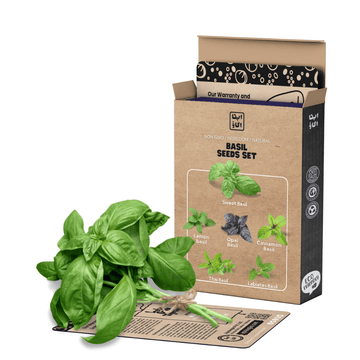
| Basil | 5–10 days | 15–35°C | March–August | Warm-season herb; protect seedlings from extreme heat |
| Dill | 10–21 days | 15–21°C | Best in mild weather | Sow shallowly and avoid transplanting where possible |
| Lemon Basil | 5–10 days | 18–30°C | March–August | Needs warmth, light, and drainage |
| Purple Basil | 5–10 days | 15–35°C | March–August | Care is similar to sweet basil |
| Sweet Basil | 5–10 days | 15–35°C | March–August | Usually grown as a warm-season annual |
| Thai Basil | 7–14 days | Approximately 16–30°C | March–August | Warm-growing aromatic basil |
| Holy Basil (Tulsi) | 7–14 days | 18–32°C | March–July | Needs warm soil and good light |
Cool-Season and Mild-Weather Herb Sowing
| Herb | Typical Germination | Approximate Temperature | General Sowing Window | Notes |
|---|---|---|---|---|
| Mint and Peppermint | 10–21 days | 13–30°C | Autumn to spring | Seed can be slow or variable; contain spreading plants in pots |
| Oregano | 7–14 days | Approximately 18–24°C | Autumn to spring | Sow small seed shallowly |
| Thyme | 14–28 days | Approximately 18–24°C | Autumn to spring | Needs light and excellent drainage |
| Chervil | 7–14 days | 15–24°C | October–February | Prefers mild weather and partial shade |
| Coriander | 7–14 days | 10–30°C | October–February in hot plains | Direct sow; plants bolt quickly in heat |
| Curry Leaf | 14–30 days or longer | 20–30°C | Warm conditions | Fresh seed is important; protect from cold |
| Fennel | 7–14 days | 15–30°C | Autumn to late winter | Direct sow in deep, well-drained soil |
| Garlic Chives | 7–21 days | 15–28°C | Autumn to spring | Provide light and consistent moisture |
| Parsley | 10–30 days | 10–25°C | Autumn to late winter | Germination can be slow; soaking may help some seed lots |
| Tarragon | 10–21 days | 10–25°C | Cool to mild season | French tarragon is normally propagated vegetatively, not from seed |
| Bay Leaf | Several weeks or longer | 15–25°C | Mild weather | Slow-growing perennial; fresh seed improves results |
| Chives | 7–21 days | 10–25°C | Autumn to spring | Suitable for pots and cool conditions |
| Lavender | 14–30 days or longer | 10–25°C | Autumn to early spring | Some varieties benefit from cold treatment; needs drainage |
| Lemon Balm | 7–21 days | Approximately 18–24°C | Autumn to spring | Sow shallowly and avoid waterlogging |
| Lemongrass | 10–21 days | 20–35°C | Warm season | Tropical herb that needs warmth |
| Lovage | 10–21 days | 10–25°C | Cool season | Large perennial herb; allow sufficient space |
| Marjoram | 7–14 days | 15–25°C | Mild weather | Small seed; use a light, well-drained mix |
| Rosemary | 15–30 days or longer | Approximately 18–27°C | Mild weather | Seed germination can be slow and uneven |
| Sage | 10–21 days | 10–28°C | Autumn to spring | Avoid wet, poorly drained soil |
| Savory | 7–14 days | 15–28°C | Spring or mild weather | Sow shallowly and provide strong light |
General Germination Tips
- Use clean trays and a fine, well-drained seed-starting mix.
- Follow the sowing depth on the packet; many herb seeds are very small.
- Keep the medium moist but not saturated.
- Provide warmth or cool conditions according to the species.
- Give seedlings bright light immediately after emergence.
- Maintain airflow and remove covers after germination.
- Be patient with slow herbs such as parsley, rosemary, lavender, and bay.
Note: Germination times and temperatures are approximate and vary by seed freshness, variety, and growing conditions.