Edible Gardening
Growing Basil Seeds at Home in Pakistan: A Beginner's Guide

Fast Facts
| Planting Season | Water Needs | Light Requirement |
|---|---|---|
| Spring; monsoon planting may suit some regions | Moderate and consistent | Full sun to light afternoon shade in extreme heat |
About Basil
Basil (Ocimum basilicum) is a warm-season herb grown for its aromatic leaves. It performs well in pots, raised beds, grow bags, and kitchen gardens when given warmth, light, drainage, and regular harvesting.
When to Plant Basil in Pakistan
| Region | Spring Season | Possible Monsoon Window |
|---|---|---|
| Punjab, Sindh, and warmer Balochistan | February–April | July–August where drainage and airflow are good |
| Khyber Pakhtunkhwa and cooler northern areas | March–May, after severe frost risk | Depends on local rainfall, humidity, and temperature |
These are general windows. Local temperature is more important than the calendar, and basil should be protected from frost, waterlogging, and extreme afternoon heat.
Botanical Profile
- Botanical Name: Ocimum basilicum
- Family: Lamiaceae
- Pollination: Mostly self-pollinating, although insects can cause crossing
- Life Cycle: Usually grown as a warm-season annual
Typical Growth Timeline
| Stage | Approximate Timing |
|---|---|
| Sowing | Day 1 |
| Germination | Approximately 5–10 days under suitable conditions |
| Vegetative Growth | Approximately 15–30 days onward |
| Flowering | Often after 40 days or later |
| Regular Leaf Harvest | Often begins around 50–70 days, depending on variety and conditions |
When and Where to Sow
- Sow after frost risk has passed and temperatures are consistently warm.
- Start seeds indoors several weeks earlier when outdoor conditions are still too cold.
- Choose a location with approximately six or more hours of suitable light.
- In severe summer heat, provide light afternoon shade.
- Use Organic Potting Mix or another clean, well-drained medium.
How to Plant Basil Seeds
- Sow shallowly and cover lightly according to the packet instructions.
- Keep the growing medium evenly moist but not soggy.
- Thin or transplant seedlings so mature plants have enough airflow.
- Small pots can be used for starting seedlings before moving them to larger containers.
Transplanting Basil
- Transplant after seedlings have several true leaves and are sturdy enough to handle.
- Harden seedlings gradually before moving them outdoors permanently.
- Move plants into grow bags, pots, or a garden bed with good drainage.
- Handle seedlings by the leaves rather than squeezing the stem.
Harvesting Basil
- Begin light harvesting after plants are established and actively growing.
- Pinch stems just above a pair of leaves to encourage branching.
- Remove flower spikes when continued leaf production is the priority.
- Do not remove too much foliage from a weak or newly transplanted plant.
Basil Care
- Check soil moisture regularly, especially during hot weather.
- Water thoroughly and allow excess water to drain.
- Feed lightly with Organic Vermicompost or another suitable fertiliser according to directions.
- Maintain airflow and inspect the undersides of leaves for pests.
Companion Planting
Basil can be included in mixed beds with tomatoes, peppers, lettuce, marigolds, and other plants that have compatible light and watering needs. Companion planting does not guarantee pest control, so continue inspecting all crops regularly.
Popular Basil Types
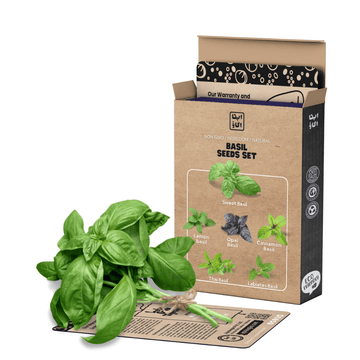
- Sweet Basil: Common culinary type
- Lemon Basil: Citrus-scented leaves
- Thai Basil: Distinctive spicy aroma
- Cinnamon Basil: Warm aromatic notes
- Dark Opal Basil: Purple ornamental and culinary foliage
Benefits of Growing Basil
- Provides fresh aromatic leaves for culinary use
- Can be harvested repeatedly
- Fits small balconies, windows, rooftops, and kitchen gardens
- Offers several colours, aromas, and flavour profiles