How to Grow Baby Leaves at Home in Pakistan: Complete Guide

Baby leaves are young, tender leaves harvested before a vegetable plant reaches full size. They are quick to grow, easy to manage in small spaces and ideal for salads, sandwiches, wraps, garnishes and light cooking. For home gardeners in Pakistan, baby leaves are especially useful because they can be grown in shallow trays, pots, balconies, rooftops and even bright indoor spaces.
This guide explains how to grow baby leaves successfully from seed, how they differ from sprouts and microgreens, which varieties perform best, and how to harvest clean, healthy leaves throughout the season.
Table of Contents
- Baby Leaves Quick Facts
- What Are Baby Leaves?
- Best Baby Leaf Varieties
- Best Growing Season in Pakistan
- What You Need
- How to Grow Baby Leaves Step by Step
- Watering, Light and Feeding
- How to Harvest Baby Leaves
- Common Problems and Solutions
- Food-Safety Guidelines
- Common Mistakes
- Frequently Asked Questions
Baby Leaves Quick Facts
| Growing factor | Recommended range |
|---|---|
| Harvest time | Usually 20 to 40 days after sowing |
| Container depth | At least 8 to 12 cm |
| Sowing depth | About 0.3 to 1 cm, depending on seed size |
| Light | 4 to 6 hours of gentle sun or bright indirect light |
| Ideal temperature | Approximately 12°C to 24°C for most varieties |
| Harvest stage | After 2 to 4 true leaves have developed |
| Best method | Dense but even sowing in trays, pots or raised beds |
What Are Baby Leaves?
Baby leaves are vegetables harvested while the leaves are still small, soft and mild. They are older than microgreens but younger than mature vegetables. Because the plants remain in soil for longer, baby leaves develop more true leaves, stronger roots and a fuller flavour.
| Type | Growing stage | Typical harvest time |
|---|---|---|
| Sprouts | Seed, root and shoot eaten together | About 3 to 7 days |
| Microgreens | Harvested around the first true-leaf stage | About 7 to 21 days |
| Baby leaves | Harvested after several true leaves develop | About 20 to 40 days |
| Mature vegetables | Allowed to reach full plant size | Varies by crop |
For ideas on using them in meals, read our guide to sprouts, microgreens and baby leaves.
Best Baby Leaf Varieties to Grow
Choose fast-growing leafy crops with tender edible foliage. A mixed tray gives better colour, texture and flavour than a single variety.
| Crop | Approximate harvest | Flavour and use |
|---|---|---|
| Lettuce | 25 to 35 days | Mild, crisp and ideal for salads |
| Rocket or arugula | 20 to 30 days | Peppery flavour for sandwiches and salads |
| Mizuna | 20 to 30 days | Mild mustard flavour with finely cut leaves |
| Kale | 25 to 40 days | Tender, nutritious leaves for salads and cooking |
| Pak choi | 25 to 35 days | Mild, crisp leaves for stir-fries and salads |
| Swiss chard | 30 to 40 days | Colourful stems and slightly earthy leaves |
| Beetroot | 25 to 40 days | Colourful leaves with a mild earthy taste |
| Mustard greens | 20 to 30 days | Spicy leaves that add flavour to mixes |
| Spinach | 25 to 40 days | Soft leaves for salads and light cooking |
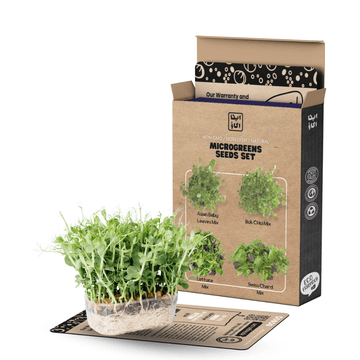
You can start with a ready-made mixed lettuce baby leaf blend, an Asian baby leaf mix, or a broader microgreens and baby leaf seed set.
Important: Do not grow tomato, potato, pepper or eggplant foliage as baby leaves for eating. These crops belong to the nightshade family, and their leaves are not considered edible.
Best Growing Season for Baby Leaves in Pakistan
Most baby leaf crops prefer cool to mild weather. They can still be grown during warmer months if they receive morning sun, afternoon shade and careful watering.
| Region | Best sowing period | Practical advice |
|---|---|---|
| Lahore and Punjab plains | September to March | Use shade cloth or bright indirect light during hot weather |
| Karachi and coastal Sindh | October to March | Protect trays from strong afternoon sun and drying winds |
| Islamabad and Peshawar | September to April | Protect young plants from heavy rain and sudden heat |
| Quetta and cooler upland areas | March to June and August to October | Use a protected location during frost |
| Northern hill regions | Spring through early autumn | Extend the season with a greenhouse or sunny windowsill |
For a regular supply, sow a new tray every 7 to 14 days instead of planting all your seed at once.
What You Need
- Baby leaf or leafy vegetable seeds
- A shallow tray, pot, window box or raised bed with drainage holes
- Loose, clean and well-draining growing medium
- A spray bottle or watering can with a gentle rose
- A bright location with morning sun or filtered light
- Clean scissors for harvesting
A tray around 8 to 12 cm deep is normally enough. Larger containers stay moist for longer and are easier to manage in hot Pakistani weather. A 1020 growing tray is suitable for repeated sowing.
How to Grow Baby Leaves Step by Step
1. Select a Clean Container
Choose a tray or pot with drainage holes. Wash previously used containers before sowing. Good drainage is essential because wet, stagnant soil encourages root rot, fungus gnats and damping-off disease.
2. Prepare the Growing Medium
Use a fine, loose mixture that holds moisture without becoming waterlogged. A practical mix is:
- 2 parts coco peat or peat moss
- 1 part mature, sieved compost
- 1 part perlite or clean coarse sand
Fill the tray and gently level the surface without pressing it too firmly. Suitable materials are available in our potting and soil media collection.
3. Moisten the Soil Before Sowing
Water the growing medium lightly before adding the seeds. The soil should be evenly moist but not muddy. Pre-moistening prevents small seeds from being displaced by heavy watering after sowing.
4. Sow the Seeds Evenly
Scatter small seeds evenly across the surface. The seeds can be closer than they would be for mature vegetables, but they should not form thick piles or overlap heavily.
- Cover very small seeds with only a thin layer of growing medium.
- Cover larger seeds, such as beet and Swiss chard, by about 0.5 to 1 cm.
- Gently press the surface so the seeds make good contact with the moist soil.
Most baby leaf seeds do not need soaking. Beet and Swiss chard seeds may be soaked briefly, but this is optional.
5. Water Gently
Use a fine spray or gentle watering can. Strong water pressure can wash seeds into one corner or bury them too deeply. Keep the surface consistently moist until germination.
6. Provide Light and Airflow
Once seedlings appear, move the tray into bright light. Morning sun is ideal. In hot weather, protect the tray from intense afternoon sun, particularly on rooftops and west-facing balconies.
Good airflow helps the leaves remain dry and reduces fungal problems. Avoid placing trays in a closed, humid corner.
7. Thin Overcrowded Areas
If the seedlings are packed too closely, gently remove a few plants so the remaining leaves have space to expand. Overcrowding produces weak stems, small leaves and poor airflow.
8. Grow Until the Baby Leaf Stage
Most varieties are ready when they have developed 2 to 4 true leaves and reached approximately 5 to 12 cm in height. Harvest time depends on the crop, season, temperature and light.
Watering, Light and Feeding
Watering
Keep the growing medium evenly moist. Do not follow a fixed daily schedule because trays dry at different speeds.
- Check the top layer of soil every day.
- Water when the surface begins to feel slightly dry.
- Water in the morning when possible.
- Avoid leaving water standing in the tray.
- During hot weather, check shallow containers twice a day.
Bottom watering is useful after germination because it keeps leaves dry. Place the growing tray in a shallow tray of water for a few minutes, then remove it and allow excess water to drain.
Light
Baby leaves normally need 4 to 6 hours of gentle sunlight or a full day of bright indirect light. Too little light causes pale, stretched seedlings. Too much strong summer sun can scorch tender leaves and dry the tray quickly.
Feeding
If you are using good-quality compost-based soil and harvesting within a few weeks, extra fertilizer is usually unnecessary. A weak liquid feed may be used after the first true leaves appear if growth is pale or slow. Avoid strong fertilizer because it can burn young roots and produce overly soft growth.
How to Harvest Baby Leaves
- Harvest in the cool morning after the leaves are dry.
- Use clean scissors or a sharp knife.
- Cut the leaves approximately 2 to 3 cm above the soil.
- Leave the central growing point intact if you want another harvest.
- Remove any damaged or yellow leaves.
- Rinse gently with clean water and dry before storage.
Many lettuce, rocket, mizuna, kale and mustard varieties can produce one or two additional cuts. Regrowth is usually slower and less uniform than the first harvest. Add a mild liquid feed after cutting only if the tray will be kept for another crop.
Store dry leaves in a clean container in the refrigerator. Excess surface moisture shortens storage life, so allow washed leaves to drain properly.
Common Problems and Solutions
| Problem | Likely cause | Solution |
|---|---|---|
| Seeds fail to germinate | Old seed, dry soil, excessive heat or deep sowing | Use fresh seed, maintain moisture and sow at the correct depth |
| Seedlings fall over | Damping-off disease or poor airflow | Use clean trays, avoid overwatering and improve ventilation |
| Long, weak seedlings | Insufficient light | Move the tray to brighter light gradually |
| Yellow leaves | Overwatering, poor drainage or low nutrients | Improve drainage and use a weak feed only when needed |
| Leaf edges burn | Strong sun, heat or concentrated fertilizer | Provide afternoon shade and flush excess fertilizer |
| Uneven growth | Seeds were sown too densely or watering was uneven | Spread seed evenly, thin crowded areas and water gently |
| Small holes in leaves | Caterpillars, beetles or snails | Inspect regularly, hand-pick pests and protect trays with fine netting |
Food-Safety Guidelines
Baby leaves are often eaten raw, so cleanliness is important from sowing to harvest.
- Use seed intended for food gardening, not chemically treated seed.
- Wash hands, trays and tools before sowing and harvesting.
- Use clean water for irrigation.
- Use mature compost and never apply fresh animal manure to baby leaf trays.
- Keep pets away from the growing area.
- Discard leaves from trays with visible mould, slime or a bad smell.
- Wash harvested leaves under clean running water before eating.
- Refrigerate harvested leaves promptly.
Common Mistakes to Avoid
- Sowing a thick pile of seed instead of spreading it evenly
- Using garden soil that becomes hard and compacted in shallow trays
- Keeping the soil constantly soaked
- Growing in weak indoor light without sufficient brightness
- Exposing tender leaves to harsh afternoon summer sun
- Using strong fertilizer too early
- Waiting too long to harvest, which produces tougher leaves
- Cutting below the growing point when planning a second harvest
- Using treated seed or fresh manure for a crop eaten raw
Frequently Asked Questions
How long do baby leaves take to grow?
Most baby leaves are ready in approximately 20 to 40 days. Rocket and mustard are usually faster, while kale, beet and Swiss chard may take longer.
Can baby leaves be grown indoors?
Yes. Place them near a bright window that receives gentle sunlight. If natural light is weak, growth may become stretched and pale.
Do baby leaves need a deep pot?
No. A container around 8 to 12 cm deep is suitable for most baby leaf crops, provided it has drainage holes.
Can I use ordinary vegetable seeds?
Yes, provided the leaves of that vegetable are edible and the seed is untreated. Baby leaf seed packs are useful because they often contain varieties selected for fast, tender leaf growth.
How many times can baby leaves be harvested?
Many varieties can be cut two or sometimes three times, but the first harvest is normally the best. Leave the growing point intact and care for the tray after cutting.
Are baby leaves the same as microgreens?
No. Microgreens are harvested earlier, usually around the first true-leaf stage. Baby leaves are allowed to grow larger and develop several true leaves. Read our microgreens growing guide for the difference in cultivation.
Why are my baby leaves bitter?
Heat, water stress and delayed harvesting can make leaves bitter. Grow them during cooler weather, keep moisture consistent and harvest while the leaves are young.
Conclusion
Baby leaves are one of the easiest and fastest edible crops for Pakistani homes. With a shallow tray, clean growing medium, even sowing, gentle watering and suitable light, you can harvest fresh leaves in only a few weeks. Sow small batches regularly to maintain a continuous supply for salads and everyday meals.
Explore ApnaUgao's lettuce baby leaf mix, Asian baby leaves and other leafy seed options to begin your home-grown salad garden.