How to Grow Broccoli in Pakistan: Complete Home Gardening Guide

Broccoli is a productive cool-season vegetable that can be grown successfully in Pakistani kitchen gardens, raised beds, pots and grow bags. The key is timing: broccoli forms its best compact green heads during mild weather, while prolonged heat can cause small, loose heads or early flowering.
This guide explains how to grow broccoli from seed in Pakistan, including the best sowing months, nursery preparation, transplanting, soil, watering, feeding, pest control and harvesting. It also links the relevant ApnaUgao seeds and growing supplies needed to start your crop.
Table of Contents
- Broccoli Growing Quick Facts
- Best Time to Grow Broccoli in Pakistan
- Choose the Right Broccoli Product
- What You Need
- Best Soil for Broccoli
- How to Sow Broccoli Seeds
- Hardening and Transplanting
- Growing Broccoli in Pots and Grow Bags
- Watering and Mulching
- How to Feed Broccoli Plants
- Helping Broccoli Form Good Heads
- Common Pests and Diseases
- Common Growing Problems
- How and When to Harvest
- Common Mistakes to Avoid
- Frequently Asked Questions
Broccoli Growing Quick Facts
| Growing factor | Practical guideline |
|---|---|
| Crop type | Cool-season annual vegetable |
| Best temperature | Approximately 15–24°C |
| Germination | Usually 4–10 days |
| Sowing depth | About 0.5–1 cm |
| Transplant stage | 4–6 true leaves |
| Plant spacing | About 40–50 cm between plants |
| Sunlight | At least 6 hours of direct sunlight |
| Container size | Approximately 25–35 litres per plant |
| Harvest time | Usually 70–100 days, depending on variety and weather |
Best Time to Grow Broccoli in Pakistan
Broccoli performs best when seedlings establish in mild weather and the heads mature before strong heat arrives. The exact timing varies by region.
| Region | Suggested nursery sowing | Transplanting period |
|---|---|---|
| Lahore, Faisalabad and Punjab plains | August to October | September to November |
| Multan and warmer southern Punjab | September to November | October to December |
| Karachi and coastal Sindh | October to December | November to January |
| Islamabad, Rawalpindi and Peshawar | August to September, or January to February | September to October, or February to March |
| Quetta and cooler upland areas | Spring after severe frost, or late summer | When seedlings are sturdy and weather is mild |
| Northern hill regions | Spring to early summer | After hard frost has passed |
These are practical windows rather than fixed dates. If daytime temperatures remain very high, delay transplanting or give young plants temporary afternoon shade. Heat-stressed seedlings may form tiny heads before the plants reach a useful size.
Choose the Right Broccoli Product
Broccoli for Mature Green Heads
For growing a traditional broccoli plant with a compact central head, use ApnaUgao Broccoli Seeds. This is the main product recommended for the method explained in this article.
Broccoli Raab or Rapini
Broccoli Raab Seeds – Spring Rapini produce a different crop. Rapini is grown for tender leaves, shoots and small flower clusters rather than one large compact broccoli head. It matures faster and can be harvested repeatedly while young.
Broccoli Microgreens and Sprouts
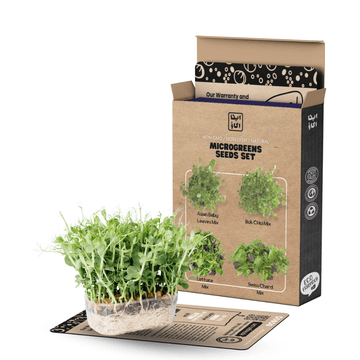
Broccoli microgreens and sprouts are harvested much earlier and require different growing methods. For quick indoor greens, choose Broccoli Microgreens Seeds or Broccoli Calabrese Sprout Seeds. Do not use sprouting instructions when your goal is a mature broccoli head.
What You Need
- Broccoli seeds
- A clean seedling tray or small nursery pots
- BIOGRO organic potting mix
- Organic vermicompost
- Organic perlite for aeration and drainage
- A raised bed, garden plot or large grow bag
- A gentle watering can or hose attachment
- Fine insect netting where cabbage butterflies are common
- A balanced plant food such as ACTIVE PLUS all-purpose formula, used according to its label
For a more complete seasonal setup, the Winter Vegetable Gardening Kit and Winter Vegetable Seeds Set are useful options for gardeners growing several cool-season crops together.
Best Soil for Broccoli
Broccoli is a heavy-feeding crop that needs fertile, moisture-retentive soil with good drainage. Compacted or waterlogged soil restricts the roots and increases disease risk.
A practical container or raised-bed mixture can include:
- 2 parts fertile garden soil or quality potting mix
- 1 part mature compost or vermicompost
- 1 part coco peat for moisture retention
- A small amount of perlite, pumice or coarse sand for aeration
A slightly acidic to neutral soil, approximately pH 6.0–7.0, is suitable. Mix organic matter throughout the root zone rather than placing a concentrated layer directly below the seedling.
Do not use fresh manure around young broccoli plants. It can damage roots, introduce weeds and encourage overly soft growth.
How to Sow Broccoli Seeds
Step 1: Prepare the Nursery Mix
Fill clean cells or small pots with a fine, loose growing medium. Moisten it before sowing so the small seeds are not displaced later.
Step 2: Sow at the Correct Depth
Make a shallow hole approximately 0.5–1 cm deep. Sow one or two seeds in each cell and cover lightly. If both seeds germinate, retain the stronger seedling.
Step 3: Maintain Even Moisture
Water gently and keep the mix evenly moist, not saturated. Broccoli seeds usually germinate in about 4–10 days under suitable temperatures.
Step 4: Provide Strong Light
Move seedlings into bright light as soon as they emerge. Weak light produces tall, thin stems that transplant poorly. During hot weather, give morning sun and protection from harsh afternoon heat.
Step 5: Thin and Care for Seedlings
Keep one healthy plant per cell. Water when the surface begins to dry and avoid leaving the tray standing in water. Seedlings are normally ready to harden when they have 4–6 true leaves.
Hardening and Transplanting Broccoli
Harden the Seedlings
About one week before transplanting, gradually expose seedlings to outdoor conditions. Start with a few hours of gentle morning sun and increase the time each day. Reduce watering slightly without allowing the plants to wilt severely.
Transplant at the Right Stage
Transplant when seedlings are sturdy and have 4–6 true leaves. Move them in the late afternoon or on a cloudy day to reduce stress.
- Water the nursery tray before removing seedlings.
- Prepare holes 40–50 cm apart.
- Keep approximately 60–75 cm between rows.
- Set each seedling at the same depth it was growing in its pot.
- Firm the soil gently and water immediately.
Do not bury the central growing point. A damaged or buried centre may prevent the plant from forming a normal head.
Growing Broccoli in Pots and Grow Bags
Broccoli can grow well in containers when each plant has enough root space. Use one mature plant per container.
- Choose a pot or grow bag holding approximately 25–35 litres.
- Aim for a minimum depth and width of about 30–40 cm.
- Make sure several drainage holes remain open.
- Use a stable container because mature plants become top-heavy.
- Place the pot where it receives at least 6 hours of sunlight.
Small containers dry quickly and restrict head size. On rooftops, raise pots slightly above hot concrete and check soil moisture more frequently during dry, windy weather.
Watering and Mulching
Broccoli needs steady moisture from transplanting through head formation. Irregular watering can slow growth, stress the plant and reduce head quality.
- Water deeply when the upper 2–3 cm of soil begins to dry.
- Apply water around the base instead of repeatedly wetting the leaves.
- Water in the morning whenever possible.
- Never allow containers to stand in stagnant water.
- Increase checks during warm, windy weather, but do not follow a rigid daily schedule.
Apply a light layer of straw, dry leaves or another clean organic mulch after the plants establish. Keep mulch a few centimetres away from the stem. Mulching moderates soil temperature, conserves moisture and reduces soil splash.
How to Feed Broccoli Plants
Broccoli needs more nutrients than many leafy vegetables because it must build a large plant before forming a head.
Before Planting
Mix mature compost or vermicompost into the bed or container mix.
After Transplanting
Allow seedlings to settle for about 10–14 days. Once new growth appears, apply a light balanced feed according to its label. Avoid pouring concentrated fertilizer directly against the stem.
During Active Growth
A measured application every two to three weeks may be useful in containers, where nutrients wash out more quickly. Reduce heavy nitrogen feeding once the plant approaches head formation. Excess nitrogen can produce large leaves with delayed or loose heads.
Browse the ApnaUgao fertilizers and nutrients collection for suitable measured feeding options.
Helping Broccoli Form Compact Heads
A good broccoli head develops when the plant grows steadily in cool, mild conditions. Sudden stress during the seedling stage can cause small premature heads, sometimes called buttoning.
- Grow broccoli in the correct season.
- Do not transplant weak, root-bound or very old seedlings.
- Keep moisture consistent.
- Give plants adequate spacing and sunlight.
- Avoid strong heat during head development.
- Do not overfeed with nitrogen.
As the central head develops, monitor it regularly. Heads can change from tight and harvest-ready to flowering within a few warm days. Some varieties also produce smaller side shoots after the central head is removed, extending the harvest.
Common Broccoli Pests and Diseases
Cabbage Worms and Caterpillars
White or yellow butterflies may lay eggs on the underside of leaves. The caterpillars chew irregular holes and can hide inside developing heads.
- Cover young plants with fine insect netting.
- Inspect the undersides of leaves several times a week.
- Hand-pick eggs and caterpillars where practical.
- Use an approved caterpillar-control product only according to its label.
Aphids
Aphids gather in curled leaves and inside heads. Wash light infestations away with water. Insecticidal soap or a neem-based garden product may be used according to label directions, avoiding harvest immediately after treatment unless the label permits it.
Cutworms
Cutworms may cut young seedlings near soil level. Keep the bed weed-free, inspect the soil around damaged plants and use simple collars around new transplants where cutworms are common.
Flea Beetles
Small beetles create many tiny holes in young leaves. Protect seedlings with netting and keep plants growing strongly so they can tolerate minor damage.
Snails and Slugs
These pests feed at night and are more active in damp gardens. Remove hiding places, hand-pick them in the evening and avoid keeping the bed constantly wet.
Damping-Off
Seedlings collapse when the nursery mix stays wet and airflow is poor. Use clean trays, fresh growing medium, moderate watering and good ventilation.
Leaf Spots and Black Rot
Remove badly affected leaves, avoid overhead watering and disinfect tools between plants. Do not work among plants while foliage is wet.
Clubroot
Clubroot causes swollen roots and wilting. It persists in soil and is difficult to correct once established. Improve drainage, avoid moving contaminated soil and rotate broccoli and other brassicas away from the affected bed for several years.
Common Growing Problems
| Problem | Likely cause | Practical solution |
|---|---|---|
| No head forming | Heat, weak growth, excess nitrogen or damaged growing point | Plant in the correct season and protect the centre of the plant |
| Very small head | Old seedlings, root stress, cold shock or overcrowding | Use young transplants, space correctly and maintain steady growth |
| Loose head | Warm weather or delayed harvest | Harvest promptly and shift future sowing to cooler weather |
| Yellow flowers appearing | The head is overmature or heat-stressed | Harvest immediately before more flowers open |
| Yellow lower leaves | Natural ageing, waterlogging or nutrient shortage | Check drainage first, then feed only if active growth remains pale |
| Hollow stem | Very rapid growth, excessive nitrogen or irregular conditions | Use balanced feeding and avoid sudden over-fertilization |
| Wilting in wet soil | Root damage or poor drainage | Restore drainage and reduce watering |
How and When to Harvest Broccoli
Harvest the central head when it is firm, compact and fully developed, but before the small flower buds begin opening or turning yellow.
- Harvest in the cool morning.
- Use a clean, sharp knife.
- Cut the main stem approximately 12–15 cm below the head.
- Leave the lower leaves and plant base in place.
- Continue watering and feeding lightly so side shoots can develop.
Check the plants daily as heads approach maturity. Warm weather can cause rapid flowering. Smaller side shoots should also be harvested while their buds remain tight.
Wash harvested broccoli thoroughly and refrigerate it promptly. When using any pest-control product, follow the stated pre-harvest interval before cutting edible heads.
Common Mistakes to Avoid
- Sowing too late and allowing heads to mature during hot weather
- Keeping seedlings in trays until they become root-bound
- Planting several mature broccoli plants in one small pot
- Using compacted soil with poor drainage
- Allowing plants to dry severely between waterings
- Applying too much nitrogen fertilizer
- Ignoring caterpillars hidden beneath leaves
- Damaging or burying the central growing point
- Waiting until yellow flowers appear before harvesting
- Removing the whole plant immediately after the central-head harvest
Frequently Asked Questions
Can broccoli grow in Lahore?
Yes. Start the nursery in late summer or early autumn and transplant once the strongest heat has eased. The goal is to form heads during the cooler months.
Can broccoli be grown in Karachi?
Yes, during the cooler part of the year. Sow from approximately October onward and provide full sun, good airflow and steady moisture without waterlogging.
How long does broccoli take to grow?
Most varieties need approximately 70–100 days from sowing to the main harvest, although temperature, variety and transplant stress can change the timeline.
How many broccoli plants can grow in one pot?
Grow one mature plant in a container holding approximately 25–35 litres. Crowding reduces root space, airflow and head size.
Why is my broccoli making leaves but no head?
The plant may be too young, overfed with nitrogen, exposed to heat or growing from a damaged central point. Maintain steady care and check whether the season is cool enough for head formation.
Can broccoli regrow after harvesting?
Many head-forming varieties produce smaller side shoots after the central head is cut. Leave the plant in place, maintain moisture and harvest each side shoot while its buds remain tight.
Is broccoli raab the same as normal broccoli?
No. Broccoli raab or rapini is grown for leafy shoots and small flower clusters. Traditional broccoli is grown mainly for one large central head followed by possible side shoots.
Can broccoli be grown from microgreen or sprout seeds?
Some seed may belong to a related broccoli type, but products sold for sprouts or microgreens are intended for dense, early harvesting. Use broccoli vegetable seeds when your goal is a mature plant and compact head.
Conclusion
Broccoli is one of the most rewarding winter vegetables for Pakistani home gardens. Start the seeds early enough, transplant sturdy young seedlings, provide fertile soil and maintain even moisture as the head develops. Regular pest checks and prompt harvesting will improve both quality and yield.
Begin with ApnaUgao Broccoli Seeds, and prepare your garden using BIOGRO Organic Potting Mix, Organic Vermicompost and suitable grow bags. Gardeners who prefer quicker leafy harvests can also try Broccoli Raab Spring Rapini.