Winter Vegetables in Pakistan: The Fun Kitchen Gardening & Rooftop Guide

Picture this: it is a cool winter morning, chai is on the stove, and instead of asking, “Aaj sabzi kya banayen?” you walk upstairs and cut fresh palak, pull a crunchy mooli, snip some dhania and check whether your matar pods are ready.
That is the magic of winter kitchen gardening in Pakistan. You do not need a farmhouse, a huge lawn or expert-level gardening skills. A sunny rooftop in Lahore, a balcony in Islamabad, a terrace in Karachi, a courtyard in Multan or even a few well-placed pots can become a productive little winter vegetable garden.
Pakistan’s cooler months are ideal for many of our favourite vegetables: palak, saag, methi, lettuce, gajar, mooli, shaljam, chukander, band gobi, phool gobi, broccoli, matar, onions and plenty of gourmet salad greens. If you have been searching for winter vegetables in Pakistan, kitchen gardening in Pakistan, vegetables to grow in pots, rooftop vegetable gardening or what to sow in October and November, this guide is your starting point.
Explore Winter Vegetable Seeds →
In This Guide
- Why Winter Is Kitchen Gardening Season in Pakistan
- The Leafy Greens & Saag Squad
- The Salad Bar: Lettuce, Rocket & Gourmet Greens
- The Underground Heroes: Root Vegetables
- The Gobi Gang: Brassicas & Superfoods
- Pods With a Payoff: Peas & Broad Beans
- The Allium Corner: Onions, Spring Onions, Shallots & Leeks
- Quick Wins: Herbs & Microgreens
- Best Winter Vegetables for Pots and Rooftop Gardens
- What to Sow from September to February
- Regional Winter Sowing Across Pakistan
- Soil, Watering, Feeding & Common Mistakes
- Frequently Asked Questions
Why Winter Is the Kitchen Gardener’s Favourite Season
Summer kitchen gardening in much of Pakistan can feel like gardening on hard mode: blazing rooftops, fast-drying pots and heat-stressed seedlings. Winter changes the game. Cooler temperatures reduce water stress, many leafy vegetables become sweeter and more tender, and pests are often easier to manage than in peak summer.
For beginners, this is the season to build confidence. A packet of spinach or radish seeds can turn into a very satisfying first harvest. For experienced growers, winter is when the rooftop becomes a mini salad bar, saag patch and gobi nursery all at once.
The golden rule: do not plant by calendar alone. Pakistan has very different climates. Watch your local day and night temperatures, then use the month as a guide rather than a rigid deadline.
Meet Your Winter Sabzi Squads
1. Leafy Greens & Saag — The “Cut It and It Comes Back” Heroes
If your goal is maximum food from minimum space, start here. Leafy vegetables are among the best crops for small kitchen gardens, balconies, terrace gardens and rooftop containers in Pakistan.
- Spinach / Palak — one of the easiest cool-season greens for beds, grow bags and wide containers.
- Traditional Saag — made for the Pakistani winter kitchen and perfect when you want a generous leafy patch.
- Qasuri Methi — compact, fragrant and excellent for pots; harvest tender leaves for fresh cooking.
- Curly Kale — a cold-tolerant superfood that gives repeated leaf harvests.
- Swiss Chard Rainbow Mix — productive greens with colourful stems that make the rooftop look as good as the dinner plate.
- Swiss Chard White Stem — a reliable leafy crop for cool-season home gardens.
Container tip: wide pots or grow bags around 6–8 inches deep are enough for many baby-leaf crops, but bigger containers hold moisture more evenly and give you a larger harvest. Sow a small patch every couple of weeks instead of the whole packet at once for a longer season.
2. The Winter Salad Bar — Lettuce, Rocket, Chicory & Endive
This is where your home garden starts feeling a little fancy. Winter is ideal for building a fresh salad garden instead of buying tired leaves packed in plastic.
- Buttercrunch Lettuce — tender, crisp leaves for pots and raised beds.
- Romaine Lettuce — upright heads that use space efficiently.
- Green Salad Bowl Lettuce — excellent for repeated baby-leaf harvests.
- Red Salad Bowl Lettuce — adds colour to both the garden and salad bowl.
- Organic Rocket / Arugula — fast-growing peppery leaves for salads, sandwiches and pizza.
- Radicchio Palla Rossa — a gourmet cool-season green with deep red leaves.
- Chicory & Endive Seed Set — a fun choice if you want to create a proper home salad bar.
Fun challenge: dedicate one rectangular planter to “salad night.” Grow three leaf colours in the same container, harvest the outer leaves, wash, toss and serve. It does not get fresher than that.
3. Root Vegetables — The Underground Treasure Hunt
Root vegetables are especially fun because half the crop is hidden. Every harvest feels like opening a surprise box—except the surprise is dinner.
- Red / Desi Carrot — a winter favourite for gajar ka halwa, salads, achar and fresh eating.
- Carrot Seeds Set — useful if you want to try several carrot types in one season.
- White Radish / Mooli — fast, satisfying and one of the easiest winter root crops.
- Crimson Giant Radish — a colourful choice for gardeners who want something beyond classic white mooli.
- Turnip / Shaljam Purple Top — great for cool weather and suitable for deep containers.
- Beetroot / Chukander — gives you edible roots and useful young leaves.
Root-crop rule: carrots, radish, turnip and beetroot generally dislike unnecessary transplanting. Direct sow them where they will grow, then thin seedlings so each root has room to develop.
Rooftop rule: roots hate shallow, compacted pots. Use loose soil and enough depth—roughly 8–10 inches for many radishes and 10–12 inches or more for carrots, turnips and beets depending on variety.
4. The Gobi Gang — Cabbage, Cauliflower, Broccoli & Friends
These cool-season crops are the heavyweight champions of the winter vegetable garden. They take more room than spinach or radish, but watching a broccoli head or cauliflower curd form in your own pot is deeply satisfying.
- Green Cabbage / Band Gobi — a classic Pakistani winter crop.
- Copenhagen Market White Cabbage — a compact-heading variety for productive cool-season beds.
- Purple Cauliflower — for gardeners who want their gobi patch to start conversations.
- Broccoli — a favourite winter superfood for home gardeners.
- Broccoli Raab / Rapini — grown for tender shoots and leafy flavour rather than one large head.
- Kale — technically part of the same brassica family, but harvested leaf by leaf.
Start brassicas in a nursery tray or small pots, then transplant healthy seedlings. On a rooftop, give each cabbage, broccoli or cauliflower plant its own generous container—around 12–14 inches deep or larger is a useful starting point—and do not overcrowd them.
5. Peas & Broad Beans — The Climbers That Pay Rent
Vertical space is free real estate. Peas let rooftop and balcony gardeners grow upward instead of outward.
- Green Peas / Matar — one of the most rewarding winter vegetables for a sunny trellis.
- Broad Beans – White-Seeded Early — a cool-season legume with substantial pods.
- Broad Beans – Violet-Seeded Early — an interesting heirloom option for the adventurous kitchen gardener.
Give peas a trellis, net, railing or strings as soon as they begin climbing. A sunny wall with a line of peas at its base can turn into one of the most productive areas of a small rooftop garden.
6. The Allium Corner — Onions, Spring Onions, Shallots & Leeks
These are slow-and-steady crops, but they earn their space because nearly every Pakistani kitchen uses them.
- Green Spring Onion — ideal when you want quick leafy onion harvests.
- Red Desi Onion — a familiar kitchen staple.
- Red Shallot — useful for gardeners who enjoy trying different alliums.
- Leek — a cool-season crop with long, mild stalks.
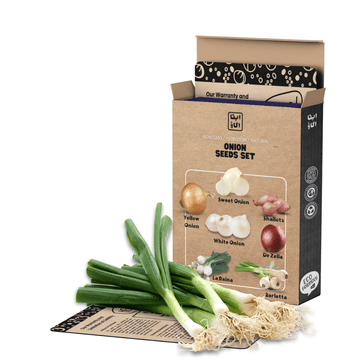
- Onion Seeds Set — an easy way to compare several varieties.
Onions do not need extremely deep pots, but they appreciate good drainage, consistent moisture and enough spacing. Spring onions are particularly friendly for compact container gardens.
7. Herbs & Quick Wins — For the Impatient Gardener
Not every harvest has to take months. Keep a small “snip-and-eat” zone near the kitchen door.
- Desi Coriander / Dhania — one of the most useful herbs for Pakistani cooking.
- Qasuri Methi — grow for tender leaves and aroma.
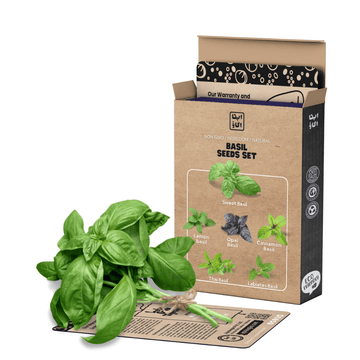
- Italian Parsley — a cool-season culinary herb for pots and borders.
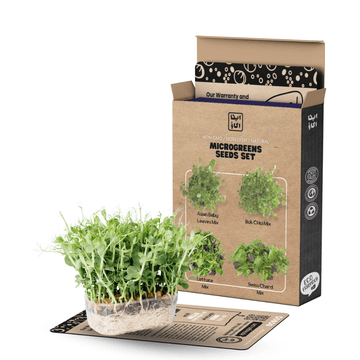
- Radish Microgreens — fast, peppery shoots for a sunny windowsill or protected balcony.
- Broccoli Microgreens — ideal when you want a tiny indoor crop while the outdoor garden grows.
Microgreens are also a great answer to the question, “Can I do kitchen gardening without a rooftop?” Yes. A bright windowsill and a shallow tray can still give you something edible to harvest.
Best Winter Vegetables for Pots, Balconies & Rooftop Gardens
| Crop group | Useful container depth | Space-saving idea |
|---|---|---|
| Spinach, methi, lettuce, rocket | About 6–8+ inches | Use wide trays or rectangular planters for more leaf area |
| Radish | About 8–10+ inches | Succession sow small batches every few weeks |
| Carrot, beetroot, turnip | About 10–12+ inches | Choose deep grow bags and loose soil |
| Peas | About 10–12+ inches | Grow vertically on a trellis or railing |
| Cabbage, cauliflower, broccoli | About 12–14+ inches | Usually give each mature plant its own large pot |
| Spring onion | About 8–10+ inches | Grow in rows in a rectangular planter |
| Coriander and parsley | About 6–8+ inches | Keep near the kitchen for frequent snipping |
These depths are practical starting points, not strict rules. Bigger containers are usually easier to manage on exposed rooftops because they dry out more slowly.
A Simple Rooftop Kitchen Garden Layout
Have only a small sunny patch? Divide it by function instead of planting randomly:
- Sunny wall: peas on a trellis.
- Largest pots: broccoli, cabbage or cauliflower.
- Deep grow bags: carrots, turnips and beetroot.
- Wide shallow planters: palak, methi, lettuce and rocket.
- Edge pots: dhania, parsley and spring onions.
- Indoor/window tray: radish or broccoli microgreens.
This “layered” approach is one of the easiest ways to make rooftop vegetable gardening in Pakistan productive without making the roof feel cluttered.
What to Sow from September to February in Pakistan
Late August: Think of this as preparation season in hot plains. Clean pots, repair drainage, prepare compost and potting mix, wash nursery trays and plan where winter sun falls on your rooftop.
September: Cooler regions can begin many winter crops. In Lahore, Faisalabad and similar plains, start with heat-tolerant leafy greens or protected nursery sowing as nights begin cooling. Peas, brassicas and roots become increasingly suitable as temperatures drop.
October: This is one of the biggest winter vegetable sowing months in Pakistan. Palak, methi, lettuce, radish, carrots, turnips, beetroot, peas, coriander, onions and brassica seedlings all deserve attention.
November: Another prime month for the winter kitchen garden. It is especially useful for gardeners who missed October, and it suits many areas of Punjab, Sindh and lower-elevation regions once days are comfortably cool.
December: Continue leafy greens, radish, salad crops and suitable root vegetables in mild areas. In colder zones, protect young seedlings from hard frost and focus on established plants.
January: Karachi and other mild-winter locations can still grow a strong range of greens, herbs and roots. In frost-prone regions, January is more about maintaining and harvesting established crops than starting tender seedlings outdoors.
February: Think “quick crops and transition.” Sow fast leafy greens, coriander, radish and suitable late-season varieties where temperatures allow, while preparing for spring and summer vegetables.
Looking for month-specific options? Explore ApnaUgao’s September vegetable seeds, November sowing, December sowing and January sowing collections.
Regional Winter Kitchen Gardening Across Pakistan
Lahore, Faisalabad & Central Punjab
September is a transition month; October and November are major sowing months for many winter vegetables. Rooftop gardeners should remember that concrete surfaces can remain warmer than ground soil, so protect newly germinated seedlings from unusually hot afternoons early in the season.
Multan, Bahawalpur & South Punjab
The season generally shifts a little later because heat lingers longer. October into November is often more comfortable for classic cool-season crops than very early September sowing.
Karachi & Coastal Sindh
Winter is prime kitchen-gardening weather because the season is mild. October, November and December are especially valuable for salad greens, herbs, roots, peas and many brassicas. Containers can still dry quickly in coastal wind, so check moisture regularly.
Islamabad, Rawalpindi & Potohar
Cool weather arrives earlier. September and October can be productive sowing months, but December and January nights may require frost protection for young or sensitive plants.
Peshawar & Khyber Pakhtunkhwa Valleys
Use local temperature and frost conditions as your guide. Many classic winter vegetables perform well once autumn cools the soil, but exposed rooftop pots may experience colder root temperatures than garden beds.
Quetta & Colder Northern Areas
Timing depends heavily on frost and altitude. Establish winter crops before severe freezes, use protected nursery sowing where needed, and consider cold frames or sheltered spaces for young plants.
The Easy Kitchen-Garden Soil Formula
A productive vegetable garden starts below the leaves. The goal is a mix that drains well but does not turn bone-dry five minutes after watering.
- Use a quality potting mix or garden soil base.
- Add mature compost or vermicompost for organic matter.
- Use coco peat or peat-based material where you need better moisture retention.
- Add perlite or another drainage component if the mix becomes dense and sticky.
- For root vegetables, remove stones and hard clods so roots can develop straight and evenly.
Rooftop warning: do not fill containers with heavy field soil alone. Besides poor drainage, excessive weight matters on roofs. Use sensible container sizes, spread loads, protect waterproofing and keep drainage outlets clear.
Watering: The Most Common Kitchen-Garden Mistake
Winter plants usually need less frequent watering than summer plants, but “less often” does not mean “on a fixed schedule.” Check the soil with your finger. Water when the upper layer begins to dry, then water thoroughly enough to moisten the root zone.
Seedlings need more consistent surface moisture than established plants. Root crops can split or grow poorly if they swing repeatedly between very dry and very wet conditions.
Feeding Your Winter Sabzi Without Turning It Into a Jungle
Leafy vegetables appreciate steady nutrition, but overfeeding with nitrogen can produce lots of soft leaves and weak growth. Brassicas and fruiting pod crops need balanced nutrition as they mature. Use compost and suitable fertilizers in modest amounts rather than trying to “force” growth with heavy feeding.
For containers, remember that nutrients wash out over time. A light, regular feeding approach is generally easier to control than one huge dose.
Seven Winter “Sabzi Crimes” to Avoid
- Sowing everything on one day. Succession sowing gives you a longer harvest instead of 40 radishes becoming ready together.
- Using tiny pots for big crops. A broccoli plant in a teacup-sized pot is not ambition; it is a hostage situation.
- Overcrowding seedlings. More seedlings do not automatically mean more food. Thin them.
- Transplanting carrots and radishes unnecessarily. Direct sow most root crops.
- Giving peas nothing to climb. Install support early, before the vines become a tangled committee meeting.
- Watering every pot equally. A shallow lettuce tray and a large cabbage container do not dry at the same speed.
- Ignoring rooftop wind and drainage. Secure lightweight pots, protect young plants and never block roof drains.
Beginner’s Winter Kitchen Garden: Start With These Six
If this is your first season, do not grow 30 crops. Start with six that teach you different gardening skills:
- Palak — quick leafy harvesting.
- Methi — compact herb/green for small pots.
- Mooli — fast root crop and great for learning thinning.
- Carrot — teaches patience and loose-soil preparation.
- Matar — teaches vertical growing and support.
- Broccoli or cabbage — teaches transplanting and growing one large plant well.
Once those are happy, add lettuce, beetroot, rocket, onions and gourmet greens. Kitchen gardening becomes much more fun when you expand because you succeeded—not because you bought every seed packet at once.
Seed-to-Plate Ideas That Make Gardening Addictive
- Fresh palak straight from the rooftop into palak paneer.
- Home-grown methi for aloo methi.
- Mooli leaves and roots from the same planter.
- Red desi carrots for winter salad or gajar ka halwa.
- Fresh matar picked while preparing pulao.
- Dhania snipped five minutes before serving chaat or curry.
- Rocket, lettuce and beet leaves turned into a “grown upstairs” salad.
That connection between seed and plate is why grow your own food in Pakistan is more than a gardening trend. It turns unused balconies and rooftops into productive spaces and makes seasonal eating much more enjoyable.
Frequently Asked Questions
Which vegetables grow best in winter in Pakistan?
Popular cool-season choices include spinach, saag, methi, lettuce, rocket, radish, carrot, turnip, beetroot, cabbage, cauliflower, broccoli, peas, broad beans, onions, spring onions, coriander and parsley. Exact timing varies by city and altitude.
What vegetables can I grow on a rooftop in Pakistan?
Almost all of the crops in this guide can be grown on a rooftop if you use the right container size, sunlight, drainage and support. Leafy greens, radish, carrots, peas, onions, lettuce and herbs are particularly practical for small rooftop gardens.
What should I sow in October in Pakistan?
October is a major winter sowing month for many regions. Common choices include palak, methi, lettuce, radish, carrots, turnips, beetroot, peas, coriander, onion and nursery sowing for broccoli, cabbage and cauliflower.
What vegetables can I sow in November in Pakistan?
November remains excellent for a wide range of cool-season vegetables, especially greens, roots, peas, onions and brassicas in many plains and warmer regions.
Can I start a kitchen garden on a balcony?
Yes. Prioritize compact crops and vertical space: lettuce, spinach, methi, coriander, spring onions, radish, rocket and peas on a railing or small trellis.
How much sunlight do winter vegetables need?
Most productive vegetables prefer several hours of direct winter sun. Leafy greens can tolerate somewhat less light than crops grown for large heads, roots or pods, but brighter conditions generally improve growth.
What is the best soil mix for vegetables in pots?
Use a fertile, loose, well-drained mix that holds some moisture. A practical container blend includes a potting-soil base, mature compost or vermicompost, a moisture-retaining component such as coco peat, and a drainage component where needed.
How often should I water a winter rooftop garden?
There is no universal daily schedule. Check each container. Water when the upper layer starts drying, and remember that sunny, windy rooftops dry faster than sheltered balconies.
Which winter vegetables are fastest for beginners?
Radish, leafy greens, methi, rocket, many lettuces and microgreens are satisfying choices when you want relatively quick results.
Build Your Winter Kitchen Garden One Pot at a Time
You do not need to turn your entire roof into a farm on day one. Start with one leafy planter, one deep root-crop bag, one pea trellis and one pot of dhania. Watch what succeeds in your exact microclimate, then expand.
A good winter kitchen garden is not measured by how many seed packets you own. It is measured by how often you walk outside and come back holding dinner.
Shop Winter Vegetable Seeds in Pakistan →
Explore seeds for kitchen gardening, rooftop gardening, balcony vegetable gardens, terrace gardens, vegetables in pots and home food growing across Pakistan—and make this winter your most productive growing season yet.